
What to Do After a Large Fire: When Business and Building Owners Should Call a Fire Insurance Lawyer
A major fire can destroy a building in an hour. The insurance claim that follows can decide whether the business, church or property ever comes back. Here is what to do in the first days after a large fire, and the warning signs that mean it is time to talk to a fire insurance attorney.
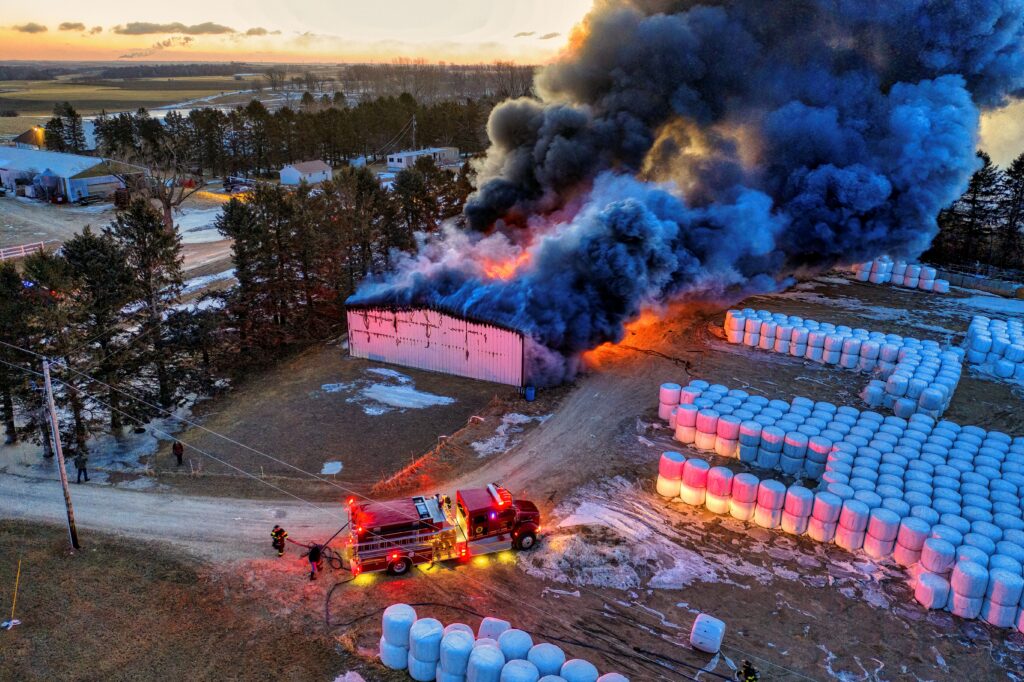
Michigan has seen a string of major fires over the past two years: an industrial plastics plant in South Haven that took roughly two million gallons of water to put out, a longtime grocery store in Southfield, a 133-year-old church in Grand Rapids, a historic hotel in Escanaba, a country club in Grosse Pointe Woods, an ethanol plant in Caro, and restaurants, warehouses and manufacturing facilities across the state.
Losses like these routinely run into the millions. They are also the claims insurers investigate most aggressively. For the owner of a business, a church, a hotel or a commercial building, the decisions made in the first days after the fire can shape the entire claim.
What to Do in the First 72 Hours After a Large Fire
- Make sure everyone is safe and follow the fire department’s instructions about entering the building.
- Notify your insurer in writing and keep a copy. Ask for a complete, certified copy of your policy, including all endorsements.
- Secure the property. Board up openings, fence the site and protect what is left from weather and theft. Keep every invoice.
- Preserve the fire scene. Do not let anyone remove debris, wiring, appliances or equipment until the origin and cause of the fire has been investigated. That evidence may prove the fire was accidental, or show that a product or contractor caused it.
- Document everything with dated photos and video, and start a list of damaged contents, equipment, inventory and records.
- Start tracking business interruption on day one: lost revenue, payroll you continue to pay, extra expenses and temporary relocation costs.
- Be careful what you sign or say. You must cooperate with your insurer, but you can have counsel present for recorded statements and examinations under oath.
Warning Signs It Is Time to Call a Fire Insurance Lawyer
Not every fire claim needs a lawyer. But on a large loss, these are the signs the claim is heading toward a dispute:
- The insurer hires a fire investigator or engineer to determine the origin and cause of the fire.
- Anyone uses the words “arson,” “incendiary” or “suspicious.”
- You receive a demand for an examination under oath.
- You receive a reservation of rights letter.
- The insurer asks for years of tax returns, bank statements and financial records.
- The building was vacant or partly unoccupied, or under renovation.
- The insurer raises a coinsurance penalty or claims the building was underinsured.
- The business income claim is being cut, delayed or disputed.
- Payment has stalled for months, or the offer is far below your contractor’s or public adjuster’s estimate.
- More than one insurer, a mortgage company or a landlord is involved.
In Michigan, an insurer that does not timely pay a covered claim can owe 12% penalty interest, and fire policies generally require suit within one year of the loss (tolled while the claim is pending). Those rules make early advice valuable.
Why Large Fire Claims Are Different
A large fire claim is not just a bigger version of a kitchen fire. It usually involves:
- Fire investigation science. Origin and cause investigations follow NFPA 921, and the insurer’s investigator is not neutral. An independent investigator can make the difference when cause is disputed.
- Complex valuation. Replacement cost versus actual cash value, code upgrades, matching, specialized equipment, historic materials and building contents.
- Business interruption accounting. Lost profits, continuing expenses and how long restoration should take.
- Multiple parties. Mortgage holders, tenants, landlords, contractors and, sometimes, manufacturers whose product may have started the fire.
Our Fire Law Team has spent decades on exactly these issues. Learn more about our fire insurance claims practice.
Fires We Handle for Business, Church and Building Owners
- Churches and other houses of worship
- Hotels, motels and lodges
- Supermarkets, grocery stores and retail centers
- Restaurants, bars and banquet facilities
- Manufacturing plants, industrial facilities and warehouses
- Office buildings and mixed-use commercial buildings
- Country clubs, golf clubs and event venues
- Fires caused by explosions, electrical failures, equipment and lightning
We also handle explosion claims and business interruption claims that often follow a major fire.
Public Adjuster or Lawyer? Often Both
A public adjuster documents and presents your claim to the insurer. A lawyer protects you when the claim becomes a dispute. On large fire losses the two work best together. We work closely with public adjusters, and if you do not yet have one, we can recommend experienced public adjusters who handle large commercial fire losses.
Questions Owners Ask After a Major Fire
When should I call a lawyer after a commercial fire?
Ideally in the first days, before the insurer’s investigation is far along. You should talk to a fire insurance attorney right away if the insurer hires a fire investigator to determine origin and cause, mentions arson or an “incendiary” fire, asks for an examination under oath, sends a reservation of rights letter, or requests years of financial records.
Do I need a public adjuster or a lawyer after a fire?
Often both. A public adjuster documents and presents the claim. A lawyer protects you when the claim becomes a dispute: coverage denials, arson accusations, examinations under oath, appraisal fights and lawsuits. We work closely with public adjusters and can recommend experienced ones.
How long do I have to sue my insurance company after a fire in Michigan?
Michigan fire policies generally require a lawsuit to be filed within one year after the loss, with that period tolled from the time you give notice of the claim until the insurer formally denies liability. The deadline can pass while the claim is still being adjusted, so get advice early.
Can my insurance company accuse me of setting the fire?
Insurers sometimes deny large fire claims by alleging the fire was intentionally set or that the owner misrepresented the claim. These accusations are serious and can be challenged with independent fire investigation and evidence. Do not respond to an arson accusation without counsel.
Does my insurance pay for lost business income after a fire?
If your policy includes business income and extra expense coverage, it may pay lost profits and continuing expenses during the period of restoration. These claims require detailed financial proof and are frequently disputed.
Talk to Us Early
For nearly 40 years, Liss + Earls has represented only policyholders, never insurance companies, in fire, explosion, storm and water losses. We are licensed in Michigan and Ohio, and on a select basis we consider large commercial fire losses in other states through pro hac vice admission with local counsel. If your business, church or building has suffered a major fire, a conversation early in the claim costs nothing and can protect your recovery. Contact us or call 248-553-2000.
Fire events described are based on public news reports. This article is general information, not legal advice. Every policy and claim is different, and past results do not guarantee a similar outcome.