
Stuart Sklar: 40 Years of Fighting Insurance Companies That Deny Fire Claims
When an insurance company denies a fire damage claim, it often starts the same way: the insurer’s fire investigator concludes the fire was intentionally set. From that single determination, the entire weight of the insurance company’s resources shifts to building a case against the policyholder — forensic accountants examining finances, subpoenas for phone records and bank statements, and an examination under oath designed to find contradictions.
For 40 years, Stuart Sklar has been the attorney policyholders call when that happens.
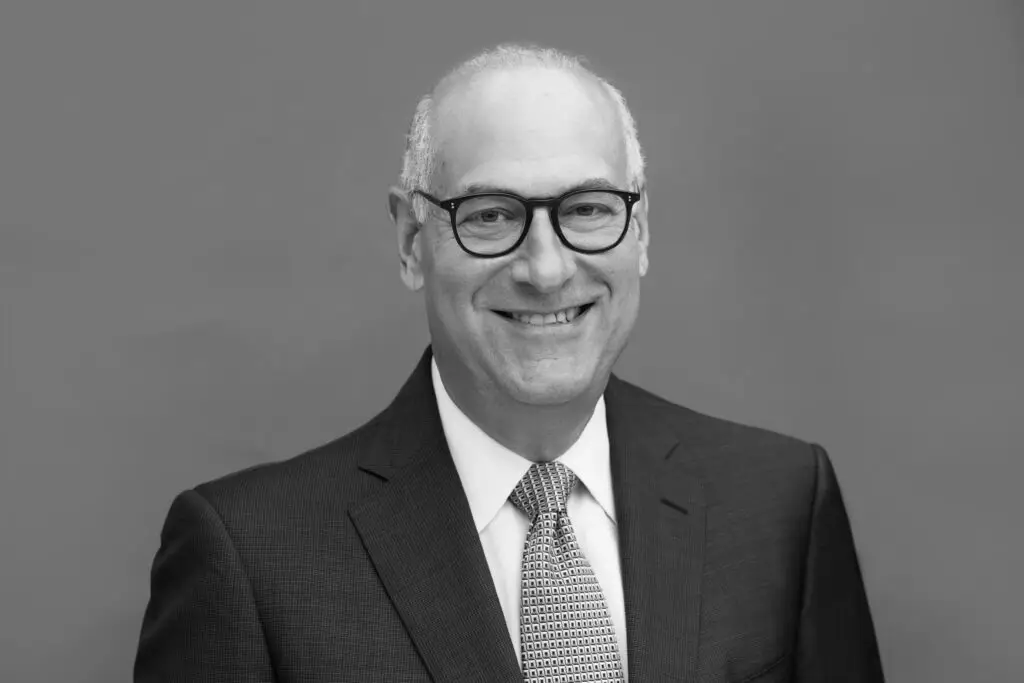
In a recent interview on the Killer Cross Examination Podcast with host Neil Rockind, Sklar — of counsel at Liss + Earls — shared the story of a career spent at the intersection of fire science and insurance litigation. From winning his first arson denial trial in federal court before he had even completed a full year of practice to serving 20 years on the committee that writes NFPA 921, the national standard for fire and explosion investigations, Sklar has built what Rockind called “one of the coolest law careers I’ve heard.”
Watch the full interview: Killer Cross Examination Podcast — Stuart Sklar
How a Career in Fire Investigation Began
Sklar grew up in Farmington Hills, Michigan, attended Harrison High School, then Michigan State University and Detroit College of Law (now Michigan State College of Law). His path into fire litigation was not planned.
Less than a year into his first job at a small firm, his boss handed him an arson denial case in federal court. Sklar had never seen a trial from start to finish. He tried the case — and won. Two months later, he tried another arson denial in federal court and won again.
Those two early victories led him to reach out to Michael Fabian, who handled property insurance claims exclusively. That partnership would last 40 years and become the foundation of the firm now known as Liss + Earls.
Why Fire Investigation Standards Changed Everything
In the early years, fire investigations had no uniform scientific standards. Investigators, in Sklar’s words, “just made stuff up.” There was no authoritative document to challenge their conclusions, and whatever a fire investigator testified to often went unchallenged.
That changed in 1992 when the National Fire Protection Association released NFPA 921, Guide for Fire and Explosion Investigations. This document established the scientific methodology for determining the origin and cause of fires and explosions. It is now used by fire investigators worldwide.
Sklar served on the NFPA 921 committee for 20 years, sitting alongside the top fire scientists, investigators, and educators in the country. He also serves on the committee for NFPA 1033, the standard for fire investigator professional qualifications, which defines the minimum knowledge and skills a fire investigator must possess.
Together, these two documents became powerful tools for challenging unqualified fire investigators and unreliable methodology — the two pillars of a Daubert challenge, named after the United States Supreme Court case Daubert v. Merrell Dow Pharmaceuticals. Under Daubert, expert testimony can be excluded if the expert is not qualified or if their methodology is not scientifically reliable.
Cross-Examining Fire Investigators: A Masterclass
On the podcast, Sklar described his approach to deposing insurance company fire investigators. He never relied on his decades of experience alone — he prepared meticulously for every deposition, reviewing the investigator’s report, file materials, photographs, client statements, and examinations under oath.
His strategy often focused on two critical vulnerabilities. If an investigator determined the wrong origin of the fire, then the cause determination was almost certainly wrong as well. Alternatively, if a fire was so destructive that every potential ignition source could not be examined, the only scientifically supportable conclusion under NFPA 921 is that the cause is undetermined — and an undetermined cause means the insurance company cannot meet its burden of proof to deny the claim.
Sklar’s reputation for cross-examination became so well known that the Michigan chapter of the International Association of Arson Investigators — the largest fire investigation training organization in the state — held classes specifically on what fire investigators should expect when Sklar was the opposing attorney.
Real Cases, Real Results
The podcast interview included several examples that illustrate how fire investigation expertise translates to real outcomes for policyholders:
The Landscaper Acquitted of Arson. A young business owner had his homeowners insurance claim denied and was then charged criminally with arson in Macomb County. The prosecution’s theory was that the fire started in the front room of the house. Sklar’s team identified a Ring camera video from a neighbor across the street showing flames shooting up over the top of the house from the back deck — while the front room windows showed no fire at all. The jury could clearly see the prosecution’s theory was wrong. The client was acquitted.
The Small Town Bar Owner. A popular bar owner in northern Michigan was charged with arson during the middle of an insurance claim. At the preliminary examination in a small district courthouse, Sklar cross-examined the state police investigator so effectively that the judge dismissed all charges before the lunch break was over.
The Bloomfield Hills Explosion. A gas riser — the part of a gas line that comes out of the ground to connect to the meter — corroded and leaked, causing an explosion that killed a woman. The defense argued that enough gas could not enter the house through an exterior leak. Sklar’s team built a partial structure, replicated the leak conditions, filled the structure with gas, and detonated it — proving the explosion was possible. When mock jurors initially struggled to understand gas migration, the team completely redesigned their presentation with detailed diagrams. By the time of trial, the defendant’s own position had shifted from “not enough gas” to “too much gas.”
The Housing Project Tragedy. Six children died in a fire at a Detroit housing project. Working alongside famed attorney Geoffrey Fieger, Sklar’s team traveled to Eastern Kentucky University’s fire science facilities, built a replica of the housing unit, and started a fire the way the defendant claimed it began. The actual fire scene looked nothing like the result — proving the defendant’s theory could not be correct.
From Fire Claims to Water Claims: How the Industry Shifted
One of the most revealing moments in the interview came when Sklar explained a trend that anyone following property insurance litigation should understand.
Because NFPA 921 made it significantly harder for insurance companies to sustain bogus arson denials, the industry adapted. In Sklar’s observation, recent years have brought far more water damage claim denials than fire claim denials — because water damage investigations have no equivalent to NFPA 921. Without a national scientific standard holding water damage investigators to the same rigor, insurance companies have more room to classify water damage as maintenance-related and deny the claim.
Industry data supports this shift. Water damage now accounts for approximately 24-28% of all homeowners insurance claims nationally, making it the single most common claim type. Water damage claims are denied at roughly two to three times the rate of homeowners claims overall, with denial rates between 9% and 15% compared to the general 5-6% denial rate.
The attorneys at Liss + Earls have adapted to this shift, handling a growing volume of water damage, storm damage, and commercial property insurance claim denials in both Michigan and Ohio.
What Policyholders Should Know
Stuart Sklar’s career offers several lessons for anyone whose insurance claim has been denied:
The insurance company’s investigator works for the insurance company. Their conclusion is not the final word. An independent investigation — ideally conducted while the fire scene is still available — can reveal a completely different origin and cause.
Qualifications matter. Under NFPA 1033 and Daubert, a fire investigator must meet specific professional qualifications and use reliable scientific methodology. Many do not. An experienced fire investigation attorney knows how to identify and expose these deficiencies.
Preparation wins cases. Even with 40 years of experience, Sklar prepared thoroughly for every deposition and trial. The same principle applies to policyholders: document everything, preserve evidence, and engage experienced legal counsel early.
A denial is not the end. From the young landscaper acquitted of arson to the family that lost a loved one in a gas explosion, the cases discussed in this interview all have one thing in common — the insurance company or the prosecution said no, and the policyholder fought back and won.
Learn More About our Fire Insurance Property Claims Practice
Add Your Heading Text Here
If your fire damage insurance claim has been denied — or if you've been accused of arson by your insurance company
— contact Stuart and the attorneys of Liss + Earls for a free consultation. Our attorneys have spent four decades fighting for policyholders and have recovered over $500 million in insurance claim recoveries.